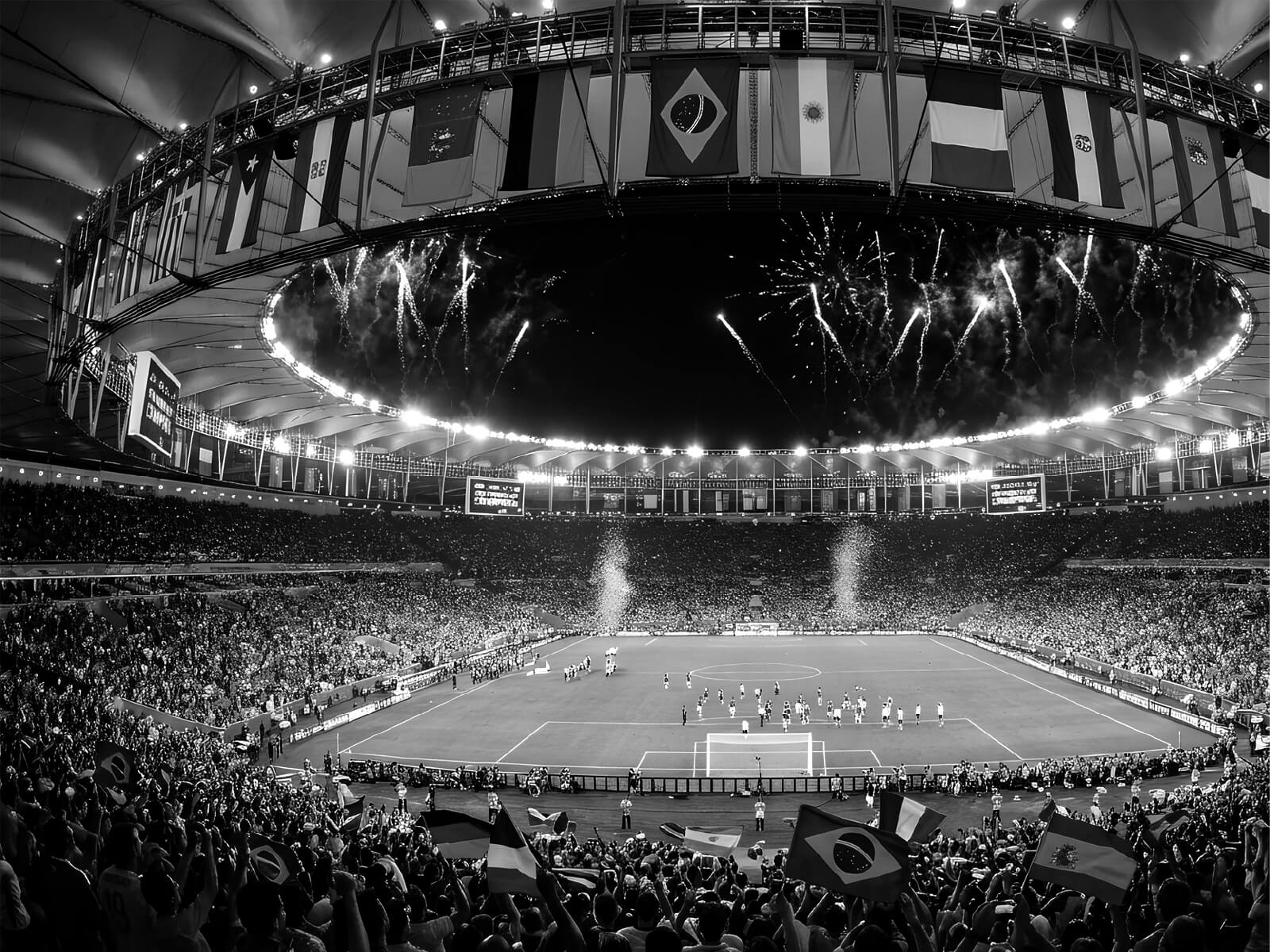

Six billion people are expected to tune in to the World Cup this summer in some form, making it this year’s standout event on the advertising calendar and a major global cultural phenomenon. With 104 games over 5 weeks, live TV is the immediate opportunity, but evolving consumption habits mean the opportunity to engage fans extends far beyond it.
Consumers will turn to social media to watch short-form content from athletes and teams, stream highlights on various platforms, catch up on results on news sites, and soak up the tournament's euphoria through creators, podcasts, and original content.
It’s five weeks of heightened excitement and always-on engagement, significantly widening the opportunities for brands. For those who understand how to engage, the rewards range from brand fame to a slice of increased consumer spending. But like the nations competing for glory in the World Cup, the competition will be fierce and the challenges significant.
What advertisers are contending with at the World Cup
The allure and magic of the World Cup lie in its unpredictability, the inevitable moments of awe that spark organic discussion and viral moments, and the shared rollercoaster of emotions felt nationwide through edge-of-your-seat, nail-biting wins and bone-crushing losses.
This beauty, however, also poses a formidable challenge for marketers. As the excitement and drama of the World Cup unfold across countless platforms and channels, brands must contend with a fast-moving and complex media landscape:
- Scattered attention and media fragmentation: Audience attention is no longer confined to a single screen. During the World Cup, it’ll move fluidly across social media, streaming, news outlets, audio, and more, making it difficult to build a unified view of the consumer.
- Culture that moves incredibly fast: With so many matches, conversations around the tournament happen at an accelerated pace. A single moment can trigger a tidal wave of new trends, discussions, and memes, leaving brands that rely on traditional planning cycles struggling to keep up or missing opportunities entirely.
- Fluctuating mood and sentiment: The mood of an entire nation can shift in an instant based on a single result. This can affect sentiment, mood, and receptiveness to advertising in a moment.
As Martin Blich, Executive Director, Head of U.S. Sports Investment & Partnerships, at WPP Media Sports, notes, “The World Cup is one of the most high-stakes moments in media. Success requires more than scale, it demands audience-centric data and intelligence to identify the fandoms and moments that truly move the needle. Brands that understand culture, respond in real time, and show up authentically are the ones that achieve the greatest impact.”
To win, brands need to move at the speed of behavior, not marketing
To win and capitalize on these moments, marketers need to move at the speed of behavior, not at the speed of marketing. This capability is now firmly within reach, with AI-powered data collaboration equipping marketers with the speed, scale, and intelligence needed to win. Behind it are two core components.
First, Private Data Networks (PDNs) provide the essential foundation to your strategy. You can think of a PDN in the same way a national team coach picks a team for the World Cup. They’ll pick the very best combination of goalkeepers, defenders, midfielders, and attackers: each player brings a unique set of skills and attributes that complement one another and, when brought together, form a well-rounded, high-performing team.
A PDN to an advertiser is a bespoke, tailored network of its most valuable brand, media owner, retailer, sports, and platform partners, who each bring unique data and diverse insights. It gives brands a complete, live view of their audience, enabled by secure, multi-party data collaboration, without ever moving or sharing raw data.
Second, AI provides the intelligence layer that works across the PDN. This is like having the very best coach, tactician, and strategist on your team, constantly working to figure out the best plays, the right players to select for the game ahead, and the formations that will give you an advantage.
WPP’s Open Intelligence does the same for brands: AI that easily digests and analyzes rich signals and complex datasets from all partners in a PDN to understand context in real time, identify new growth audiences, and determine the best channels and platforms to reach them. This intelligence allows brands to quickly adjust and adapt campaigns based on sentiment and intent, build and deliver on-brand creative assets on the fly, and react to viral or tournament-defining moments instantly.
Imagine a CPG that can leverage transactional data from its retailer partners and deeply understand fan preferences and attitudes by bringing rightsholders and sports data specialists into its network. Then, to seamlessly and securely activate this intelligence across streaming, digital, and social, with campaign performance fed back into your network for in-flight optimization. A learning ecosystem fed by high-quality signals that continually, and transparently, optimizes for performance and growth.
Turning passion into performance and growth
Together, PDNs and Open Intelligence form a flywheel of collaborative intelligence that empowers brands to move at speed, meet audiences where they are, and deliver seamless omnichannel experiences.
As Blich adds, “The World Cup ignites passion and excitement for billions of fans worldwide. WPP Media Sports helps brands harness that energy with precision using AI and data, turning audience insights, sports expertise, and real-time activations into campaigns that resonate.”
Ultimately, the brands that can react in the moment will be best placed to win the World Cup. Being proactive with your data strategy will enable you to act when it counts, ensuring your brand becomes a memorable part of the tournament.